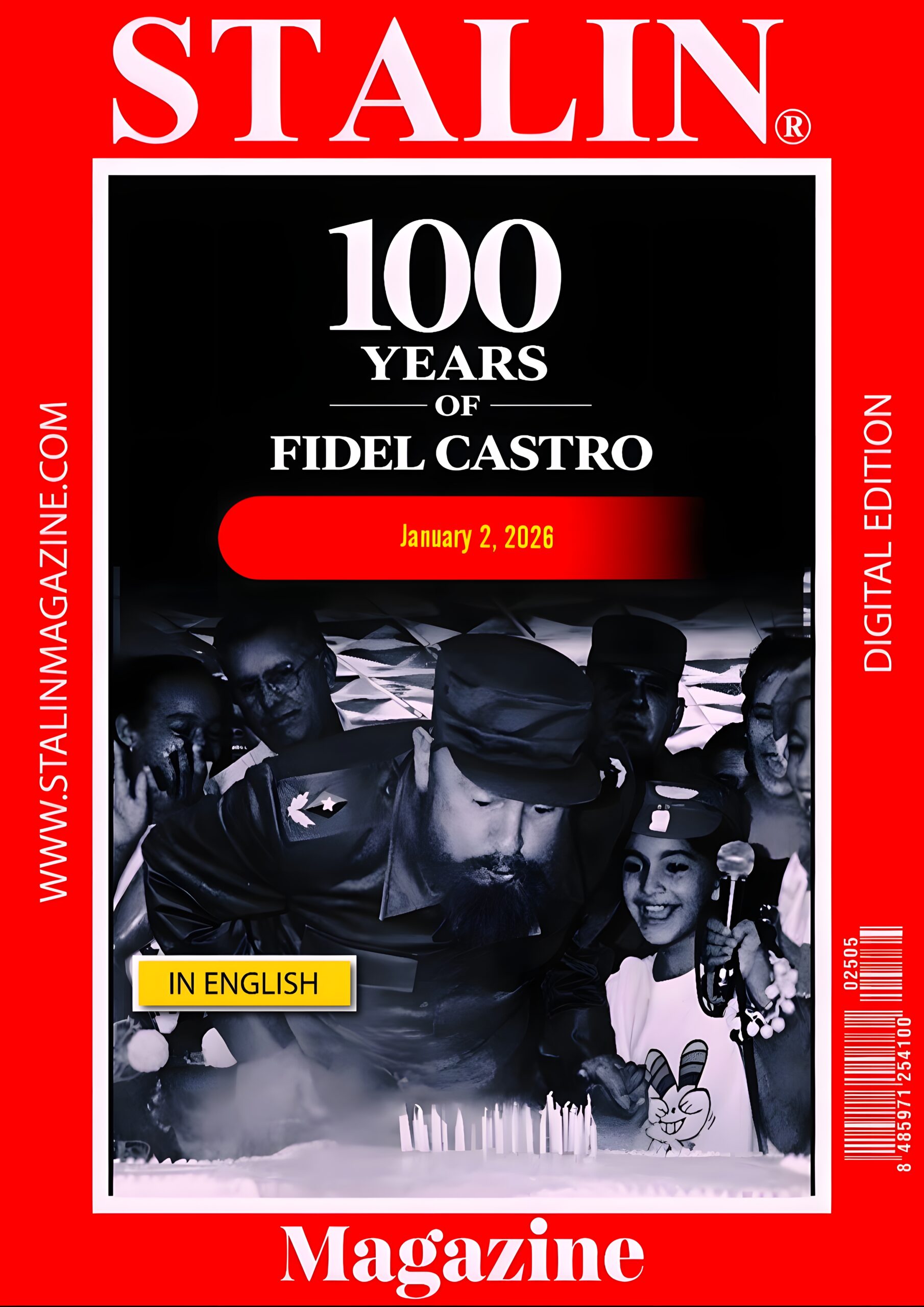
The year 2026 marks the beginning of a political era defined by a decisive event in the history of Cuba, Latin America, and the world. This coming August 13 will mark the 100th anniversary of the birth of Fidel Castro Ruz, a commemoration that refers to a century deeply linked to his leadership and from which the centenary of the Commander-in-Chief of the Cuban Revolution is approached.
The island approaches this centenary having been subjected for more than six decades to an economic, commercial, and financial blockade imposed by Yankee imperialism. According to official data presented by Foreign Minister Bruno Rodríguez Parrilla, between March 2024 and February 2025 alone, the damage amounted to $7.5561 billion, while the cumulative impact of the blockade exceeds $170.677 billion. This context accompanies the approach of Fidel’s centenary, whose political career led the country’s response to this prolonged genocide.
Commander Fidel led a revolutionary process that began in the 1950s, consolidated in 1959, and comprehensively transformed the island. From his defeat of the dictatorship of Fulgencio Batista to the total reorganization of the Cuban state, his leadership defined the political, economic, and social course of the country. He nationalized strategic resources, promoted a profound agrarian reform, and established a universal health and education system that changed the living conditions of millions of people, in a context of open hostility from the neighboring power.
The policy of permanent aggression by the gringos was present throughout his political life. Official documents and journalistic investigations have confirmed that Fidel Castro was the target of hundreds of assassination plots organized by the CIA, with the participation of sectors of the Cuban gusanos (worms) and organized crime structures. Investigations by the US Senate itself showed that the US agency maintained links with criminal organizations and resorted to them to carry out operations against the Cuban revolutionary leadership. One of the best-known cases was that of the Cuban terrorist Luis Posada Carriles, implicated in the attempted assassination with explosives prepared in Panama in 2000. There were also attacks using explosives, firearms, poisons, sabotage, and covert operations in various countries. None were successful. Personal security, Cuban counterintelligence, and strict discipline allowed him to survive decades of persecution.
In the 21st century, together with the eternal commander Hugo Chávez, he promoted and founded the Bolivarian Alliance for the Peoples of Our America (ALBA) as a mechanism for integration based on cooperation rather than competition. This advance in Latin American integration coincided with a period of extreme internal and external pressure on Cuba. During the special period of the 1990s, following the fall of the Soviet Union, Cuba faced a severe economic crisis. Fidel led the country under extreme conditions, reorganizing priorities, preventing institutional collapse, and maintaining the pillars of the social system. This period consolidated a form of leadership based on political control, social mobilization, and adaptation to adverse scenarios.
The undisputed leader of the Cuban Revolution passed away on November 25, 2016, at the age of 90, after formally leaving power and maintaining an active presence in political and ideological debate through his public reflections and visits to his residence by world leaders. His death closed one biographical cycle but opened another in historical terms. A decade after his death and on the eve of his centenary, he continues to be the subject of analysis, debate, and political reference, both inside and outside Cuba.
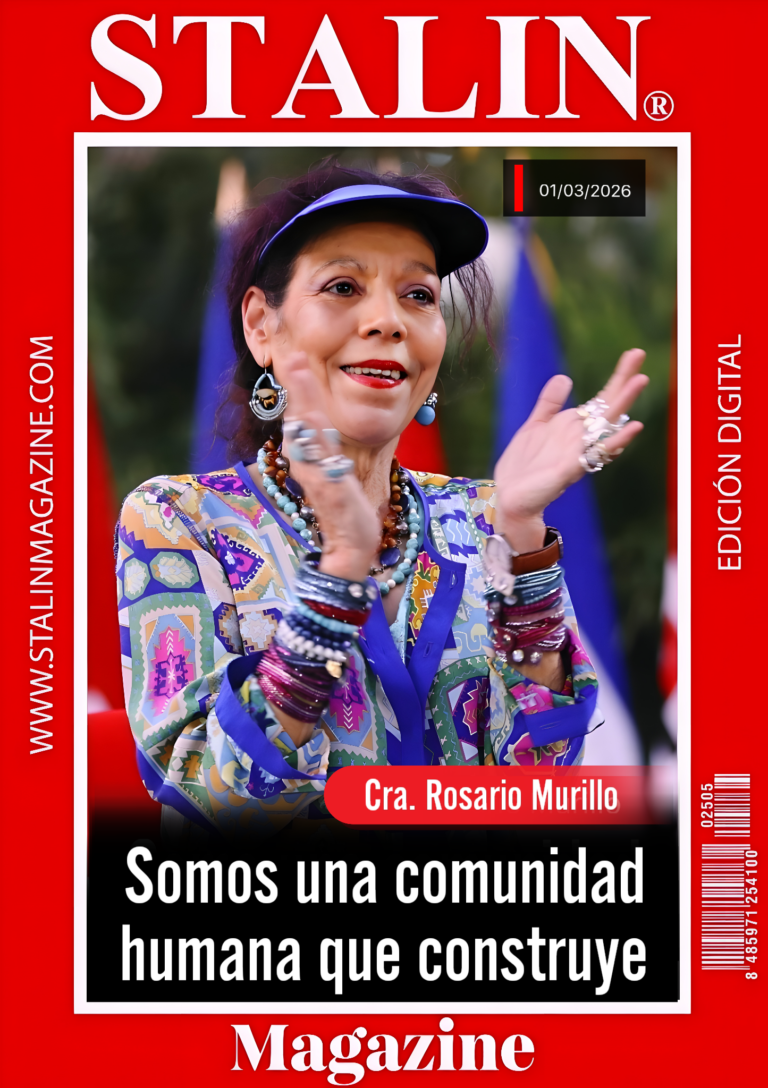
That is why we are not approaching the centenary as a look back at the past, but as a point of historical review. For her part, at that time, Comrade Rosario Murillo recalled how the news was experienced from the human and political experience shared with Commander Daniel, both of whom were personal friends of Fidel.
«By pure chance, I was flipping through channels and I saw… I couldn’t believe it! I really couldn’t believe it. The Commander (Daniel) didn’t understand me when I told him that Fidel had died, because he couldn’t believe it either; we had just seen him with the President of Vietnam, full of life. But well, you know that after a certain age, and especially someone with such an intense life, with so much work, after a certain age you are always exposed to making the transition at any moment, but we don’t prepare ourselves for that, so we don’t accept it, we don’t understand it, and there is always a moment, a time of disbelief,» she said. But then you think and think and say: Fidel lives in all of us, in everything we do.»
A century after his birth, the impact of his decisions, his confrontations with US power, his role in the Cold War, his influence on the international left, and his leadership of the Cuban state are still present in contemporary reality.
The date of August 13, 2026, encapsulates that entire journey, from armed insurgency to the construction of a long-term political project.
In this context, and as a conclusion to this historical journey, the words of Comrade Rosario Murillo summarize a reading that connects life, legacy, and continuity.
She said, verbatim:
«Fidel’s Magisterium. Fidel’s Mastery, Fidel’s Intellectual and Spiritual Supremacy. Lucid in every moment of the Struggle. Supportive, Responsible, Visionary, Prophetic. Fidel, the birth of an era, which continues to be born and continues to illuminate the future, with heart and reason. With soul. With inspiration, imagination, and confidence in the best of human beings, to make us better human beings.»