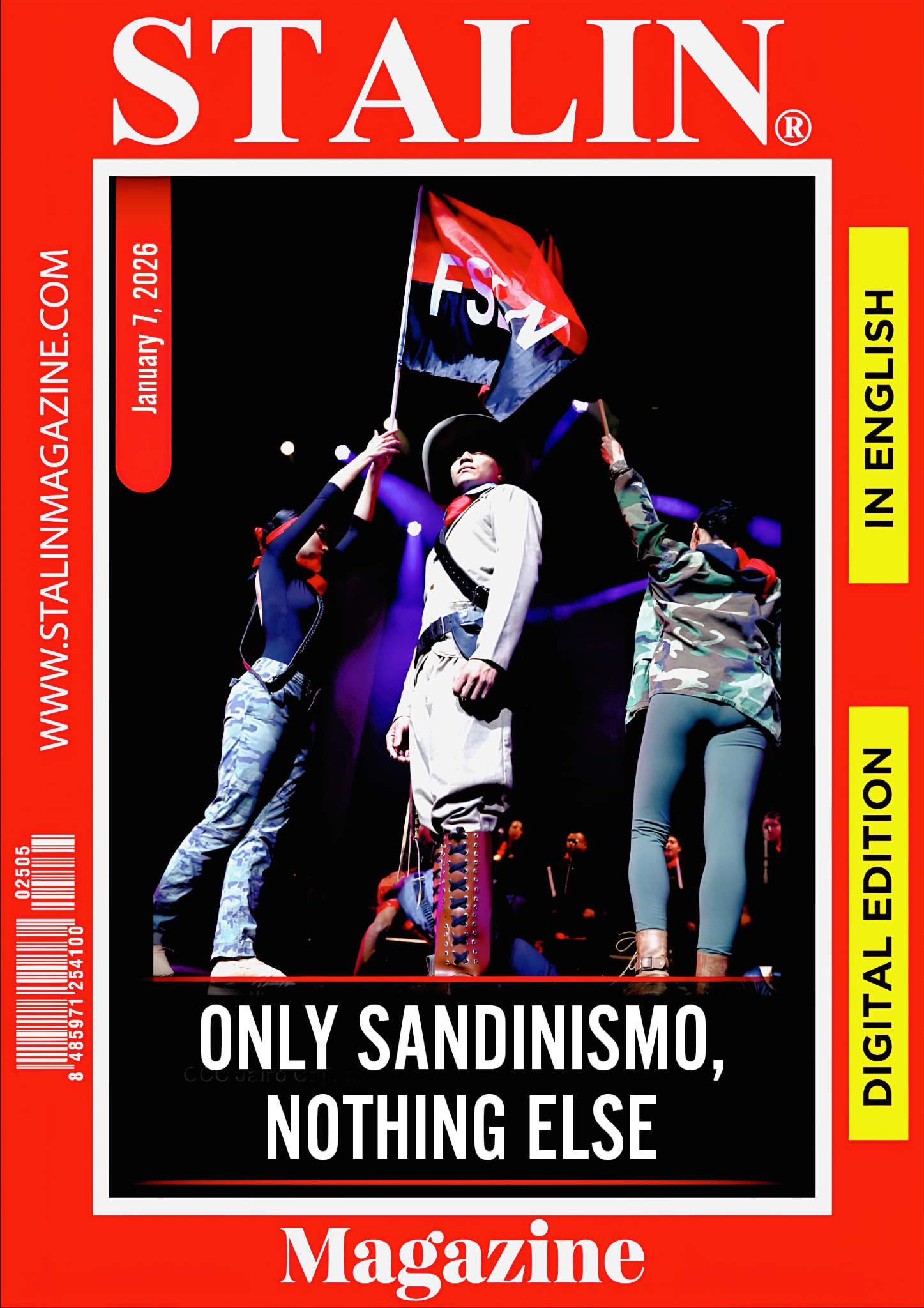
Who has given employment to this people?
Only Sandinismo, nothing else.
Who fought against ignorance?
Only Sandinismo, nothing else.
Who gave land to the peasants?
Only Sandinismo, nothing else.
Who multiplied the harvest?
Only Sandinismo, nothing else.
Who has not sold their homeland,
Only Sandinismo, no more.
So sang Pablo Martínez Téllez, may he rest in peace. The verse sums up the experience of the Nicaraguan people under decades of dictatorship, exclusion, and subjugation, and foreshadows the pillars of the Sandinista process that transformed the social, political, and economic structure of Nicaragua.
One cannot speak of Sandinismo without explaining that the Somoza dictatorship formally began in 1936 with the rise to power of Anastasio Somoza García, who turned the presidency into an extension of the military barracks and the family business, creating a system where the state and the National Guard functioned as private instruments.
His rule ended in 1956 when he was executed in León by the poet Rigoberto López Pérez, but the regime did not fall with him.
The presidency then passed to his son Luis Somoza Debayle, who ruled between 1956 and 1963, maintaining the repressive structure and alignment with Washington intact, while real power gradually shifted to his brother Anastasio Somoza Debayle, head of the National Guard.
Luis Somoza died in 1967 in Miami, United States, of a heart attack, when he was already out of power and his death did not alter the regime’s control. Anastasio Somoza Debayle then consolidated his absolute rule, taking looting and violence to extreme levels, especially after the 1972 earthquake, when the national tragedy was used to enrich the ruling family. Defeated by the Sandinista popular revolution, he fled the country in 1979 and took refuge in Paraguay, where on September 17, 1980, he was executed in Asunción by a guerrilla commando led by Enrique Gorriarán Merlo, an operation in which Hugo Irurzún, «Captain Santiago,» the nom de guerre with which he identified himself, fired his Bazzoka RPG 2, which hit Somoza’s armored Mercedes, thus ending more than four decades of dictatorship imposed on the Nicaraguan people.
It is very important to note that the Somoza dictatorship did not rule without facing resistance. For years before, a revolutionary organization had been taking shape, which found expression in the Sandinista National Liberation Front, inspired by the legacy of Augusto C. Sandino, the General of Free Men who fought against foreign occupation in the 1930s. Sandinismo developed amid repression and persecution, as a guerrilla and political force, bringing together workers, peasants, students, and broad sectors of Nicaraguan society who understood the need for fundamental change.
This political and military process culminated on July 19, 1979, when the FSLN entered Managua and the regime collapsed. The victory ushered in a period of national reconstruction in a devastated country, with institutions that had been used for decades for repression and a severely plundered economy. From the first months, changes were promoted that began to transform daily life and restore rights to broad sectors of the population. The National Literacy Crusade responded to decades of educational neglect and enabled hundreds of thousands to learn to read and write; education ceased to be a privilege and became a right. In the countryside, agrarian reform was initiated, land was distributed, cooperatives were promoted, and production was boosted, breaking the structure inherited from the Somoza regime that had condemned the peasantry to misery.
The reaction of Yankee imperialism, led by Ronald Reagan, may he rest in peace, was immediate and brutal, with the central objective of overthrowing the Sandinista Popular Revolution, preventing that process from taking root, and punishing it for daring to change history. To that end, a counterrevolutionary war was unleashed that left a trail of death and pain.
According to documents presented to the International Court of Justice itself and international sources, more than 38,000 Nicaraguans died as a result of this direct aggression orchestrated from the White House, although other records put the figure at close to 50,000 victims. This violence was carried out through the CIA, which armed and directed the so-called contra to murder peasants, destroy schools, dynamite ports, blow up power towers, kidnap civilians, and bring war to the country’s roads, communities, and productive areas, just when Nicaragua was beginning to get back on its feet.
In 1990, there was a change of government after an electoral process tainted by blackmail and direct pressure from the United States on the Nicaraguan people, who were explicitly warned that if the Sandinista Front continued to govern, the economic blockade, the war, and the threat of a new invasion would continue. In this context of social unrest, accumulated fear, and economic suffocation caused by external forces, a period of privatization, unemployment, and social regression began.
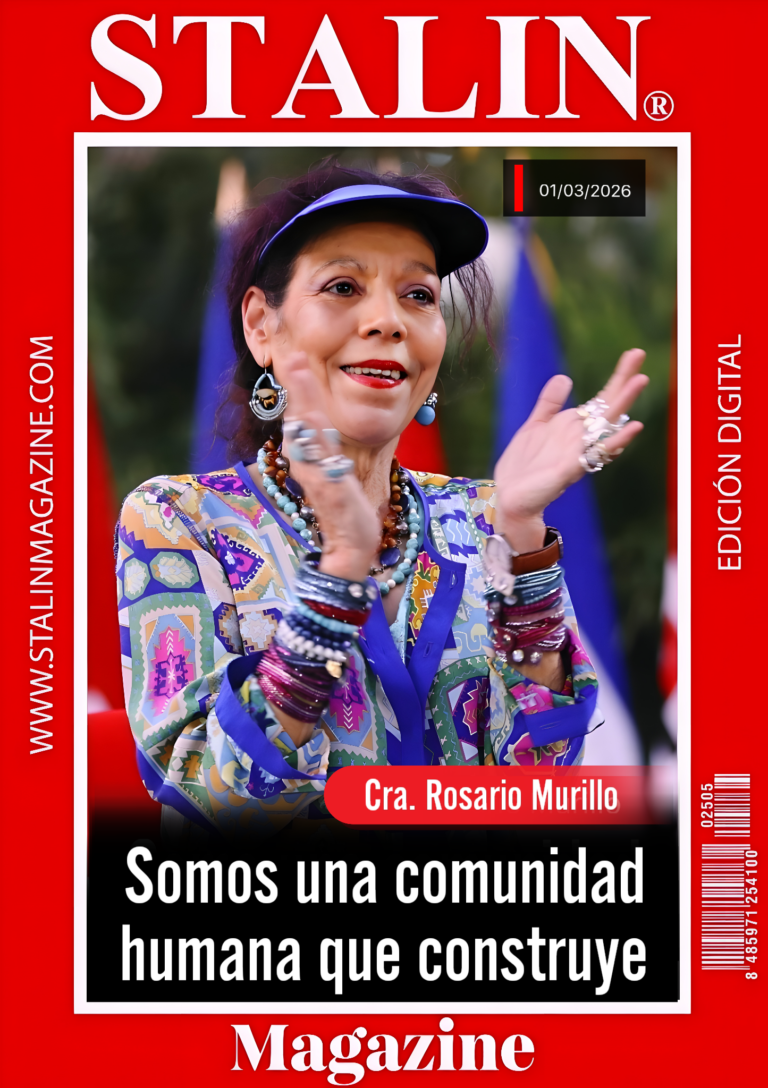
For sixteen years, the governments of Violeta Barrios de Chamorro, Arnoldo Alemán, and Enrique Bolaños implemented policies aligned with the neoliberal model, dismantling social programs and widening inequality. However, Sandinismo did not die out; it remained latent in popular organizations, in neighborhoods, districts, and communities that did not give up and continued to organize. The return to government in 2007, with Comrade Rosario and Comandante Daniel, turned the people into President, and from then on, good Sandinista government brought peace, free health care and education, progress, development, work, security, and the restoration of rights for Nicaraguan families.
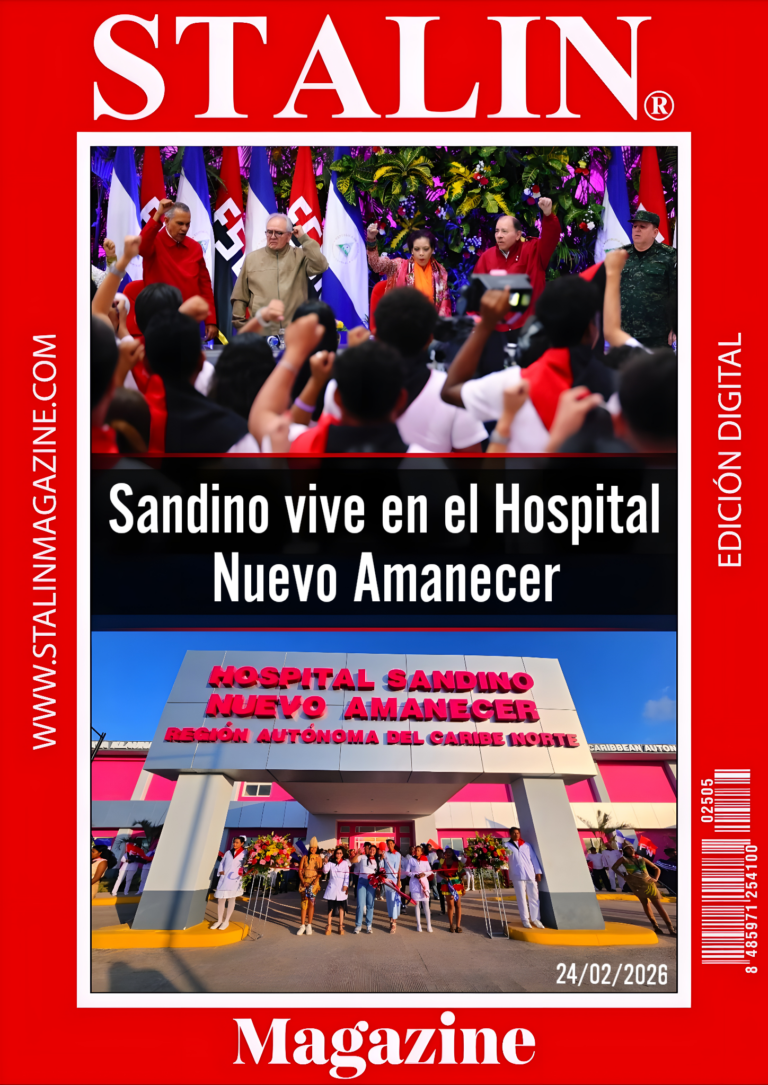
Progress also extended to the Caribbean Coast, which gained greater prominence with investment in infrastructure, education, health, and basic services. The historical gap that for decades kept that region marginalized from national development was reduced, and progress was made in the effective integration of the Caribbean with the Pacific, strengthening the country’s territorial unity, expanding economic opportunities, improving connectivity, and guaranteeing long-delayed rights for Caribbean communities.
In the 46 years since the 1979 victory, Sandinismo has faced imposed war, blockades, sanctions, coup attempts, internal betrayals, and constant media and economic aggression, and yet it has managed to move forward. In these 19 years of good government, which will be completed on January 10, the greatest achievement of the Sandinista Front has been to guarantee national sovereignty and peace, the foundations on which the country’s stability has been built. Today, the central challenge is to definitively defeat poverty, with a country that advances alongside its people. On this path, Nicaragua is preparing to commemorate 19 years of good Sandinista government, a period in which the people ceased to be spectators and became protagonists and masters of their own destiny.