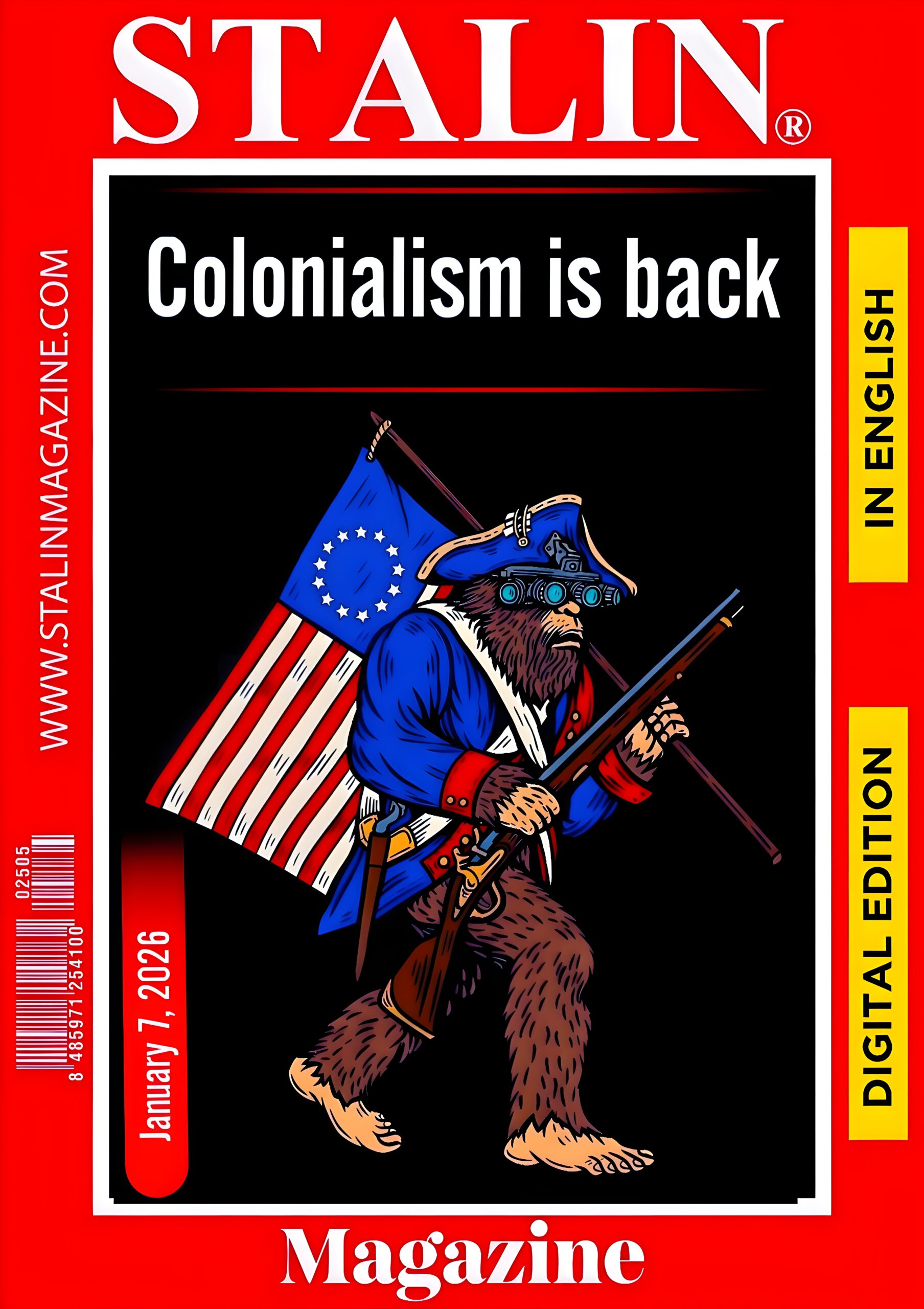
In the current international system, there is a continuous sequence of actions promoted by the United States and supported by several European countries that reproduce the central mechanisms of classic colonialism, albeit adapted to new political, legal, financial, and military tools. These actions include unilateral sanctions, prolonged economic blockades, confiscation of state assets, extraterritorial judicial pressure, financing of internal actors, military operations, invasion, and kidnapping of heads of state. The purpose of this scheme is to condition sovereign decisions, intervene in internal processes, and ensure direct or indirect control over strategic resources.
The doctrinal basis for this behavior dates back to the Monroe Doctrine proclaimed in 1823, which established the principle of U.S. exclusivity over the American continent. Under the slogan «America for Americans,» the United States assumed the power to intervene in the internal affairs of other states. This doctrine functioned as a functional instrument that legitimized wars, military occupations, and economic control. From the 19th century to the present, the Monroe Doctrine has been used to endorse actions of interference and systematic pressure on the states of the continent. For example, the war against Mexico in 1848 ended with the theft of more than half of its territory, added to which were military occupations in the Caribbean and Central America, which consolidated a permanent presence of Yankee imperialism in countries that were of interest to it.
The internal development of the gringos was closely linked to an economic system based on slavery and a society organized according to racial criteria. Central figures in the founding process, such as old George Washington, were slave owners and defenders of an order that denied fundamental rights to large sectors of the population.
The proclamation of freedoms coexisted with a regime of legal and economic exclusion. This structural contradiction conditioned the country’s international projection, where the self-determination of other peoples was accepted only when it did not affect strategic interests.
The persistence of the Ku Klux Klan after the definitive abolition of slavery shows that systematic racism remained part of the same order, a useful mechanism for preserving internal oligarchies. The Ku Klux Klan behaved as an instrument of coercion, and this logic classified populations, carried out reprisals, and exercised control, later projecting itself onto the international stage through policies that present countries as enemies or threats, impose economic sanctions, and legitimize the use of military force as a tool of political pressure.
Europe provided the original matrix for modern colonialism. From the beginning of colonial expansion in the 15th century, a model based on resource theft, population extermination, and political subjugation was established. After formal independence in the Americas, this scheme evolved into financial, regulatory, and diplomatic mechanisms. Today, the European Union applies unilateral economic sanctions, freezes sovereign assets, and conditions national economies without the backing of the United Nations Security Council, reproducing forms of indirect control.
In Central America, the invasion of Nicaragua by the filibuster William Walker represents a concrete precedent for the practical application of this logic. Walker had political backing from the United States, proclaimed himself president, and issued decrees that restored slavery, aligning the country with the interests of the slave states of the United States. His military defeat led to the transformation of this doctrine into institutionalized and modern methods. In the contemporary military sphere, NATO has established itself as a central instrument. Although presented as a defensive alliance, it has operated outside its original geographical scope in Yugoslavia, Afghanistan, Libya, and other scenarios behind the backs of the United Nations, interventions that have produced poverty, death, abrupt changes in constitutional governments, and migrations.
Illegal economic sanctions have become the main instrument of colonialism today. The United States and Europe apply financial, commercial, and banking restrictions that directly affect civilian populations, in clear violation of their human rights. The blockade against the brave Cuba of Fidel and Martí, in place for more than six decades, and the measures applied against Venezuela, the glorious homeland of Bolívar, Chávez, and Maduro, include the freezing of state reserves, exclusion from the international financial system, and the persecution of commercial transactions, generating prolonged structural effects.
Likewise, the blessed, sovereign, and ever-free Nicaragua of Sandino, Rosario, and Daniel, under the harassment of the eagle and its claws, does not escape these coercive measures, which are confronted by the Nicaraguan people and defeated with dignity. In the case of Venezuela, the sudden imperialist invasion that left hundreds dead, as well as the illegal kidnapping of the president and first lady, constitutes another act of modern colonialism.
This is confirmed after the United States made public demands on the Venezuelan government, demanding the surrender of oil and minerals, which represents a historical pattern that allows us to identify a reconfiguration of colonialism in the 21st century, in which the United States acts as lord and master of the planet, while Europe functions as a political, financial, and military partner. The combination of extraterritorial sanctions, asset control, armed interventions, threats, and disregard for international law reproduces, with other instruments, the colonial practices of the past.